Understanding Vascular Conditions

Vascular conditions cover a wide range of abnormalities that can affect blood vessels at any scale, from microscopic capillaries to major arteries. Conditions such as plaque buildup, blood clots, weakened vessel walls, and faulty valves disrupt the natural flow of blood, hindering the delivery of oxygen and nutrients while impeding the removal of waste products. This disruption can lead to extensive tissue and organ damage, resulting in the potential for life-threatening events like strokes, heart attacks, or aneurysm ruptures if not promptly addressed.

What is a Vascular Specialist?

A vascular specialist is a doctor who specializes in the diagnosis and treatment of diseases of the blood vessels. These blood vessels include arteries, veins, and lymphatic vessels.

Vascular specialists have extensive training in the body's circulatory system. This allows them to provide comprehensive care for all vascular conditions, using a variety of medical, minimally invasive, and surgical treatments. The rigor and depth of their training make them uniquely qualified to evaluate and restore vascular health. Their expertise spans medical management, imaging interpretation, endovascular procedures, bypass grafting, and conventional surgery.

When you are experiencing any disorder that impacts blood flow or vascular function, it is important to see a board-certified vascular specialist promptly. This will help to preserve circulation and prevent severe complications.

When to See a Vascular Specialist

You should schedule an appointment with a vascular surgeon promptly if you experience any symptoms or health concerns that may indicate an underlying blood vessel disorder. Getting specialized vascular care early is crucial for proper diagnosis and effective treatment. If you experience any of the following symptoms, it is important to see a vascular specialist:

  • Leg pain and swelling
    This can be a sign of deep vein thrombosis (DVT), chronic venous insufficiency (CVI), or other vascular conditions.
  • Non-healing wounds
    Wounds or ulcers on your legs or feet that don't heal or take a long time to heal may be a sign of poor blood circulation.
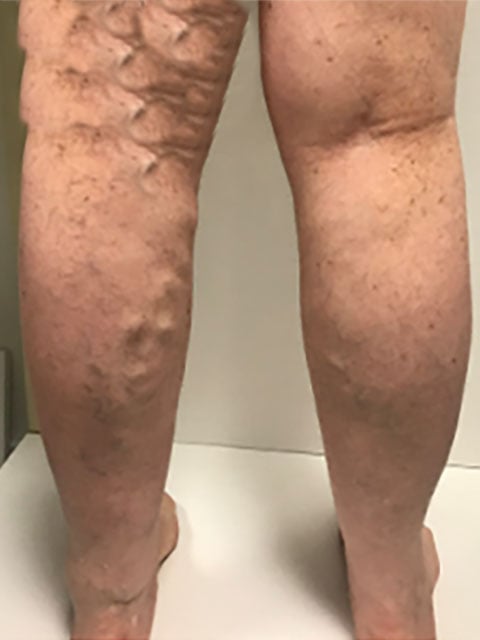
  • Varicose veins
    Bulging and twisted veins often seen in the legs can sometimes indicate underlying venous insufficiency, which may require medical attention.
  • Chest pain
    Chest pain can be a symptom of various cardiovascular conditions, including those affecting the blood vessels. It's important to rule out any vascular-related issues.
  • High blood pressure
    Uncontrolled high blood pressure can damage blood vessels over time, increasing the risk of various vascular disorders.
  • Family history
    If you have a family history of vascular diseases, you may be at a higher risk and should consider regular check-ups.
  • Risk factors
    Having risk factors such as smoking, diabetes, obesity, and a sedentary lifestyle can increase your chances of developing vascular problems.
  • Prior vascular conditions
    If you have been previously diagnosed with a vascular condition, regular follow-ups with a vascular specialist are crucial for monitoring and management.

Vascular Diagnostic Tests

Accurate diagnosis is the cornerstone of effective vascular care. Your vascular specialist will determine which diagnostic tests are most appropriate based on your symptoms, medical history, and physical examination. These tests play a vital role in uncovering underlying vascular issues, guiding treatment decisions, and improving overall vascular health. Here are some common vascular diagnostic tests:

  • Doppler Ultrasound
    This non-invasive test uses sound waves to create images of blood flow in the arteries and veins. It's commonly used to diagnose conditions like deep vein thrombosis (DVT), peripheral artery disease (PAD), and varicose veins.
  • Duplex Ultrasound
    A combination of traditional ultrasound and Doppler ultrasound, this test provides both visual images and real-time blood flow data. It's particularly useful for assessing blood vessel narrowing, clots, and valve function.
  • Angiography
    This x-ray-based test involves injecting a contrast dye into the blood vessels to visualize the blood flow. It's helpful in diagnosing blockages, aneurysms, and other abnormalities.
  • CT Angiography (CTA)
    Computed tomography (CT) scans combined with contrast dye create detailed images of blood vessels, aiding in the diagnosis of arterial conditions.
  • Magnetic Resonance Angiography (MRA)
    This non-invasive imaging technique uses magnetic fields and radio waves to create images of blood vessels. It's particularly valuable for assessing the arteries in detail without using X-rays.
  • Arterial Plethysmography
    This test measures blood pressure at various points along the arteries, helping identify blockages and assess blood flow.
  • Venous Plethysmography
    Similar to arterial plethysmography, this test evaluates blood flow in the veins, assisting in the diagnosis of conditions like varicose veins and venous insufficiency.
  • Ankle-Brachial Index (ABI)
    This test compares blood pressure measurements in the arms and legs to assess the presence of peripheral artery disease.
  • Digital Subtraction Angiography (DSA)
    An advanced form of x-ray angiography, DSA provides real-time images of blood vessels during the injection of contrast dye, aiding in the detection of abnormalities.

Vascular Procedures and Treatment Options

Vascular health is essential for overall well-being. When issues arise within the circulatory system, there are a variety of advanced procedures and treatments available to address them. Vascular specialists employ cutting-edge techniques to ensure optimal blood flow and prevent potentially serious complications. Here are some key vascular procedures and treatment options:

  • Pedal loop angioplasty
    This minimally invasive procedure is used to treat peripheral artery disease (PAD) by opening up narrowed or blocked arteries in the lower extremities. A balloon-tipped catheter is inserted through a small incision and inflated to widen the artery, restoring proper blood flow and alleviating symptoms such as leg pain and cramping.
  • Vein ablation
    Vein ablation is a technique used to treat varicose veins and chronic venous insufficiency (CVI). Through minimally invasive methods like radiofrequency or laser ablation, the damaged vein is sealed, redirecting blood flow to healthier veins and improving circulation.
  • DVT treatment
    Deep vein thrombosis (DVT) occurs when a blood clot forms within a deep vein, often in the legs. Timely treatment is crucial to prevent the clot from breaking free and causing a pulmonary embolism. Therapies may include anticoagulant medication, catheter-based techniques to remove the clot, and compression stockings to improve blood flow.
  • PE treatment
    Pulmonary embolism (PE) arises when a blood clot travels to the lungs, potentially causing breathing difficulties and even death. Treatment involves anticoagulant medication to prevent further clot formation, along with supportive measures to stabilize the patient's condition.
  • Chronic venous insufficiency (CVI) treatment
    CVI occurs when the veins struggle to send blood from the legs back to the heart. Treatments may include lifestyle changes, compression stockings, and minimally invasive procedures to improve vein function and reduce symptoms like swelling and discomfort.

Testimonials

She made me feel like I was the most important person she could be taking care of.

 I would like to commend three of your workers. I was in earlier today for a stress test and they helped me through it. My first experience was with Suzanne. I came for the test expecting something different than what was "the reality." Suzanne and I spoke and she realized the traditional test was going to be difficult for me. She explained my options and walked me through making sure I could have the nuclear test scheduled and done instead. I felt like I mattered to her and wasn't just a patient walking through. Then I was lucky enough to work with Madison. There are not enough kind words to say about her. She made sure I understood everything and made me feel cared for. I felt safe in her care. She was professional and thoughtful at the same time. I know it would have been a different experience for me if not for her. She made me feel like I was the most important person she could be taking care of. She deserves as much praise as you can give her. I am lucky I got to work with her. And in the room with the infusion, (I think that's what it was called. The awful part of the test.) Emily was my person, along with Madison. My anxiety was pretty bad and she was able to calm me down with her explanations, kindness, and professionalism. She was awesome. You are lucky to have them working for you.
- A |

Thanks to both of you it was a pleasant experience with absolutely no anxiety at all.

Dear Linda & Michelle: I wanted to thank you both for your excellent care given to me yesterday, when I was in your office for my PET scan. From the moment I arrived you explained everything to me in perfect detail so there were no “surprises” at all and I knew exactly what to expect. Kudos to you Linda for finding a vein for the IV right away! Michelle, you were very reassuring and by the way…you make good coffee!!!

- E |

I had my life back.

Doctor Dilip Viswanath made the recommendation that I start EECP therapy. I hugged the wall down the hall to my first session. I was able to walk back slow but without help. I felt better with each passing day. I had my life back. I have my freedom again and am able to drive again. I still have medical problems that are also being addressed but look at me now.

- P |

I felt as if I was the only one that mattered!

With the volume of people you serve, it would be so very easy to just “get them in and get them out,” but that was not the case. I felt as if I was the only one that mattered! So please extend my thanks and appreciation to your very excellent, professional and courteous staff.

- R |

My heart is full of thankfulness for how you took care of him.

Dear Dr. Rosenberg:

When B. turned twenty-one he was diagnosed with Lupus and he had his first heart attack.  My thoughts at that time was that one day I might have to eulogize him despite all of my tears and prayers.  For 53 years I lived with that dreaded thought but I was encouraged by your dutiful care of him.  Your diligence and dedication to him personally was responsible for him reaching age 53.

You may not recall when you detected a totally blocked artery when he was in his late twenties.  You consulted with Lupus specialists and heart surgeons to determine the next step.  The surgeons were eager to perform because of B.'s blood clotting issues they would have to do a beating heart procedure, which according to them would mean a write up in medical journals.  You pulled me aside to note that surgery would have a time limit and I quote: "No one is touching him until I am certain what is best for him because I intend to get him to a more normal longevity." Consequently, you gave him a stress test which indicated his body created its own natural bypass.  I am sure that decision saved his life.

Not only did you minister to his medical difficulties and emergencies, you provided him with life-saving medications when his insurance carrier denied coverage. B. received the best care because you and your staff cared about him.  Every complaint, discomfort and emergency was dealt with swiftly which gave us all a sense of comfort and relief.  Amazingly, B. was afforded direct and personal contact with you.  Who can call the doctor and be given direct access to him! B. could! I remember when he had an attack in Media, PA.  I was with him when he contacted you.  I spoke with you and indicated that I preferred that his hospitalization be in the Lady of Lords where you could take care of him.  You immediately arranged for an ambulance.  After heart attack number ten, surgery was required.  While you were on vacation, you called daily to get updates on his condition following that quadruple bypass surgery.

My heart is full of thankfulness for how you took care of him.  Your attention to his well-being gave me additional time to have him in my life.  I cherished and admired him for he did not seek sympathy, nor did he bemoan his fate.  He accomplished much in service to others. Despite pain or uncertainty, he answered all calls for help and mentored those in need.  I firmly believe he is being rewarded for his good deeds and now he can finally rest.  I miss him dearly and wish he had a longer life free of anxiety and pain.

Please extend my gratitude to your staff.  Not only were they very kind and supportive toward him and in my presence hey spoke so highly of him and his dog.  I am truly appreciative of their solicitude.

-R |

Vascular Specialists Near Me

Finding the right vascular care team close to home is important for ongoing management of vascular health. With the right specialist, you can get answers, develop an effective treatment plan, and take control of your vascular wellness. Get to know our esteemed vascular specialists near you.

Restore Blood Flow, Alleviate Symptoms, and Enhance Your Vascular Health

Don't put off addressing potential vascular issues. Early detection and treatment is key. Whether you've been diagnosed with a vascular condition or have new symptoms, we are here to help. Our compassionate specialists will listen to your concerns, provide a thorough evaluation, and craft a customized treatment plan to fit your needs. Request an appointment with our specialists today.